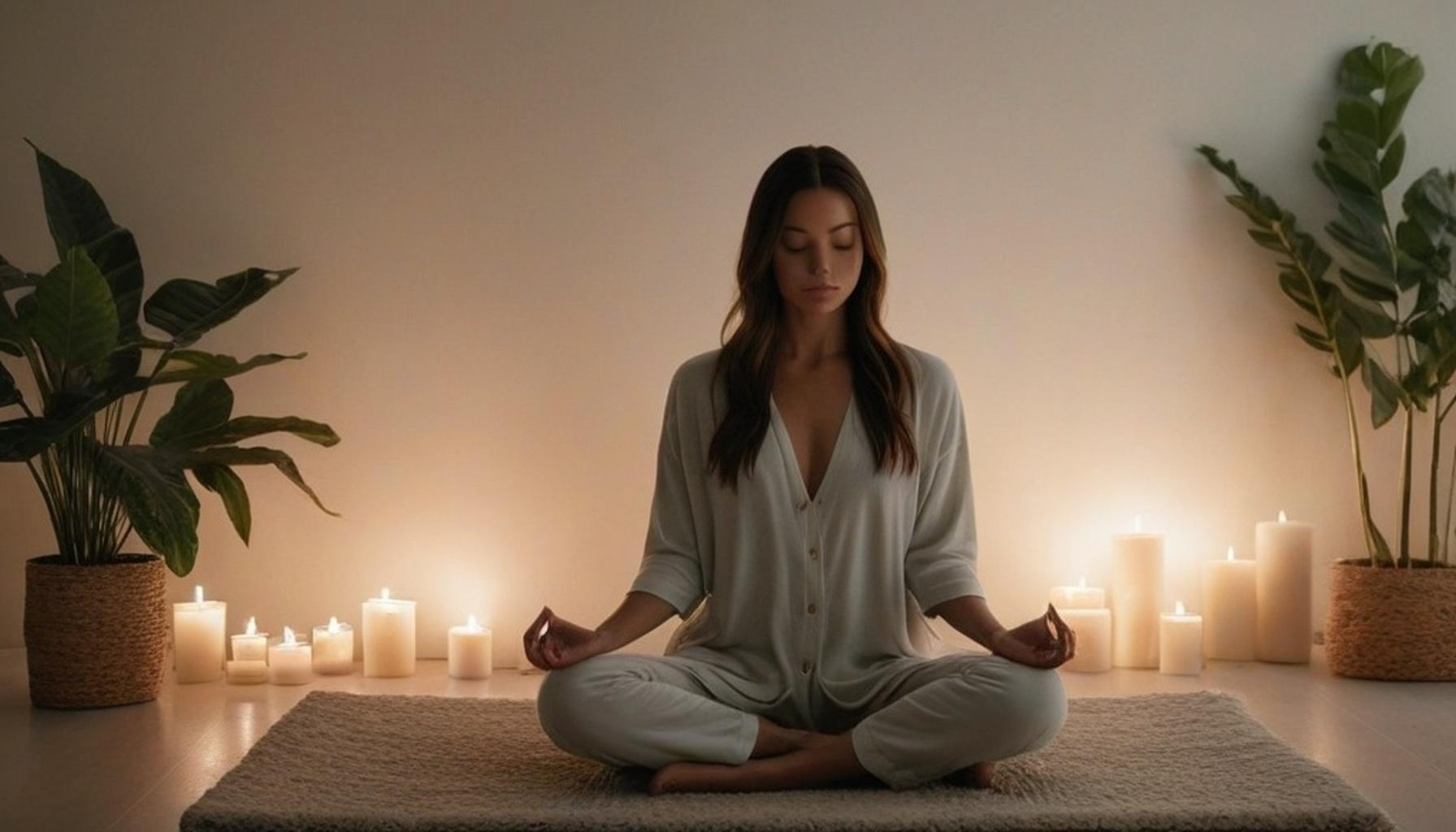
Integrating Mindfulness Techniques into Your Evening Routine for Better Sleep Quality
Why Your Nighttime Habits Might Be Sabotaging Your Sleep
Nearly 70 million Americans struggle with chronic sleep issues, according to the CDC, and the culprit often isn’t just screen time or caffeine. It’s the racing mind that refuses to power down when the lights go off. This is where mindfulness techniques for better sleep enter the conversation, offering a science-backed way to bridge the gap between a hectic day and restful night.
Think about the last time you lay in bed replaying an email exchange from work, a grocery list, or tomorrow’s deadlines. That mental loop isn’t a personal failing—it’s your nervous system stuck in overdrive, unable to recognize that the day is actually over. Millions of people across the country experience this nightly tug-of-war between exhaustion and an overactive mind.
The Missing Link in Modern Sleep Hygiene
Most advice focuses on avoiding blue light or cutting caffeine after noon. But an evening routine for sleep built around mental stillness addresses something deeper: the nervous system’s inability to shift from “go mode” to “rest mode.” Without that transition, even a dark, cool, screen-free bedroom won’t guarantee quality rest.
Practicing mindfulness before bed isn’t about clearing your mind completely. It’s about training attention so anxious thoughts lose their grip. Researchers at institutions like Harvard Medical School have found that consistent mindfulness practice can lower cortisol levels, the stress hormone directly linked to insomnia and fragmented sleep cycles.
This matters because sleep debt in the United States isn’t a minor inconvenience. The American Academy of Sleep Medicine estimates that insufficient sleep costs the economy over $400 billion annually in lost productivity, healthcare expenses, and workplace accidents. Behind those numbers are real people—commuters nodding off at red lights, parents running on fumes, and employees struggling to focus during morning meetings.
What This Article Covers
- Simple relaxation techniques for sleep you can start tonight, no experience required
- How breathing exercises and body scans trigger physiological calm
- Practical stress relief evening practices that fit into busy American schedules
- The research behind sleep quality improvement through consistent mindfulness practice
Each of these areas connects to a bigger picture: sleep isn’t just about hours logged, but about the quality of rest your body actually receives. A person sleeping eight hours while mentally tense may wake up more exhausted than someone who slept seven hours in a state of genuine relaxation.
Whether you’re a night-shift worker in Chicago or a parent juggling bedtime chaos in Austin, these strategies adapt to real life. Small, intentional shifts—not drastic overhauls—often produce the most lasting results. You don’t need a silent retreat or an hour of meditation. Sometimes five minutes of focused breathing before your head hits the pillow is enough to signal your body that it’s finally safe to rest.
LEARN MORE: The Impact of Sleep Hygiene on Mental Health and Daily Productivity
The Science Behind Winding Down: Why Your Brain Needs a Signal
Your nervous system doesn’t just switch off because you decide it’s bedtime. It needs a cue, something researchers call the parasympathetic shift. This is the biological transition from alertness to calm, and it’s the foundation of any effective evening routine for sleep.
Without that shift, your body stays flooded with cortisol and adrenaline long after you’ve closed your laptop. That’s why someone can feel “wired but tired,” lying in bed physically exhausted yet mentally alert enough to draft a mental to-do list for tomorrow.
This disconnect between physical fatigue and mental arousal is more common than most people realize. According to the American Academy of Sleep Medicine, roughly one in three American adults reports symptoms consistent with insomnia at some point in their lives. Many of these cases aren’t rooted in a medical disorder but in a simple failure to trigger the body’s natural relaxation response. The nervous system has two primary modes: the sympathetic system, which governs fight-or-flight reactions, and the parasympathetic system, which handles rest and digestion. Modern life, with its constant notifications and late-night scrolling, keeps millions of Americans stuck in sympathetic mode well past sunset.
How Mindfulness Interrupts the Stress Cycle
Mindfulness techniques for better sleep work by giving the brain something else to focus on besides worry. Instead of suppressing thoughts, which often backfires, mindfulness redirects attention toward sensation, breath, or sound. This subtle shift reduces activity in the amygdala, the brain’s alarm system, according to neuroimaging studies from UCLA’s Mindful Awareness Research Center.
Over time, this practice doesn’t just help you fall asleep faster. It changes the way your brain responds to stress triggers throughout the day, creating a ripple effect that supports long-term sleep quality improvement.
Consider what typically happens in the hour before bed for most working Americans:
- Scrolling through emails or social media feeds while half-watching television
- Mentally rehearsing tomorrow’s schedule, deadlines, or conflicts
- Feeling physically tired but unable to settle the mind
- Lying awake for 20 minutes or more before sleep finally arrives
This pattern, repeated night after night, trains the brain to associate bedtime with mental activity rather than rest. Breaking that cycle requires more than turning off the TV earlier. It requires actively practicing mindfulness before bed so the body learns a new association.
Simple techniques such as body scans, in which attention moves slowly from the toes upward, or counted breathing patterns like the four-seven-eight method, give the mind a concrete task to focus on. This matters because an idle brain often defaults to rumination, replaying stressful conversations or anticipating tomorrow’s challenges. By anchoring attention elsewhere, mindfulness essentially starves that anxious loop of the fuel it needs to keep running.
A Simple Test: Are You Actually Relaxed at Bedtime?
Ask yourself this: when your head hits the pillow, is your jaw clenched? Are your shoulders tense? Is your breathing shallow and quick? These are physical markers of unresolved stress, and they explain why so many people struggle despite doing everything “right” on paper.
Genuine relaxation techniques for sleep target these physical signals directly, rather than just addressing environmental factors like lighting or temperature. That’s the piece most sleep hygiene checklists miss entirely.
Progressive muscle relaxation, a technique that involves deliberately tensing and then releasing each muscle group, offers a practical starting point. So does simply noticing where tension hides, often in the jaw, neck, or hands, without judgment. Addressing these physical cues, rather than assuming a dark room and a cool thermostat will do all the work, may be the missing link for those who still toss and turn despite following every conventional tip available.
Key Mindfulness Techniques for Better Sleep: A Quick Reference Guide
Before diving deeper into practical applications, this table summarizes the core mindfulness techniques for better sleep and their measurable benefits, offering a snapshot of how each practice contributes to a more restful evening routine for sleep.
| Mindfulness Technique | Impact on Sleep Quality |
|---|---|
| Deep Breathing Exercises | Activates the parasympathetic nervous system, lowering heart rate within 5 minutes |
| Body Scan Meditation | Relaxation techniques for sleep that release muscle tension accumulated during the day |
| Gratitude Journaling | Shifts focus from stress to positivity, a proven stress relief evening practice |
| Digital Detox Before Bed | Reduces blue light exposure, supporting natural melatonin production |
| Guided Meditation Apps | Structured mindfulness before bed sessions linked to faster sleep onset |
RECOMMENDED: Nighttime Rituals: Creating a Relaxing Routine to Improve Sleep
Building a Practical Framework for Nightly Mindfulness
Knowing that mindfulness helps is one thing. Actually weaving it into a busy American household, where dishes need washing and kids need bedtime stories, is another challenge entirely. The good news is that an effective evening routine for sleep doesn’t require an hour-long meditation retreat. It requires consistency and a handful of techniques that fit into fifteen or twenty minutes.
Sleep researchers at Harvard Medical School have noted that the timing of mindfulness practice matters almost as much as the technique itself. Practicing too early, right after dinner, may not carry the calming effect through to bedtime. Practicing in bed with the lights already off tends to work best, since it directly precedes sleep onset.
Five Techniques Worth Trying Tonight
Not every method resonates with every person. Some people respond better to auditory cues, while others need something tactile. Here are approaches that have gained traction among sleep specialists and therapists across the country:
- Four-seven-eight breathing: Inhale for four seconds, hold for seven, exhale for eight. This pattern activates the vagus nerve and slows heart rate within minutes.
- Body scan meditation: Mentally move attention from head to toe, noticing tension without trying to force relaxation.
- Guided sleep apps: Platforms like Calm and Headspace report millions of nightly users specifically seeking sleep-focused content, a sign of how mainstream this practice has become.
- Gratitude journaling: Writing three specific moments from the day shifts mental focus away from anxiety and toward closure.
- Progressive muscle relaxation: Tensing and releasing muscle groups from feet to face, systematically discharging physical stress.
None of these require special equipment or lengthy training. What they demand is repetition, since the nervous system learns through pattern recognition, not one-off attempts.
Why Consistency Outperforms Intensity
A 2019 study published in the journal Behavioral Sleep Medicine found that participants who practiced brief mindfulness exercises nightly for two weeks reported significant sleep quality improvement, even when each session lasted under ten minutes. The key variable wasn’t duration. It was frequency.
This finding challenges the assumption that longer sessions produce better results. In reality, ten minutes of focused breathing done every night likely outperforms an hour-long session attempted sporadically once a week.
Stress relief evening practices work similarly to physical exercise in this sense. A single workout won’t transform fitness levels, but months of moderate, regular activity will. The same principle applies to mindfulness before bed, where the cumulative effect matters more than any single night’s performance.
For those juggling demanding schedules, pairing mindfulness with an existing habit, such as brushing teeth or turning off lights, can help cement the routine without requiring extra willpower each night.
YOU MAY ALSO LIKE: Mindfulness and Sleep: Meditation Techniques to Improve Rest Quality
Making Mindfulness a Lasting Part of Your Night
The science is fairly clear at this point. Mindfulness techniques for better sleep aren’t a wellness fad destined to disappear next year. They’re grounded in measurable changes to heart rate, nervous system activity, and brain wave patterns that occur when the mind slows down before bed.
What makes this approach appealing is its low barrier to entry. No prescription, no expensive equipment, no complicated schedule overhaul. Just a willingness to trade fifteen minutes of scrolling for fifteen minutes of intentional stillness.
Americans lose an estimated 1.2 million working days annually due to insufficient sleep, according to RAND Corporation research. Against that backdrop, small nightly investments in relaxation techniques for sleep start to look less like self-care indulgence and more like practical necessity.
Start Small, Stay Realistic
Nobody needs to master every technique mentioned here. Pick one, whether it’s breathing exercises or a body scan, and test it for two weeks before judging its effectiveness.
Sleep specialists generally agree that expecting instant transformation sets people up for disappointment. The nervous system adapts gradually, not overnight, despite the pun.
An evening routine for sleep built around mindfulness works best when it feels sustainable rather than forced. If journaling feels tedious, try breathing instead. If sitting still feels uncomfortable, progressive muscle relaxation might fit better.
The Bigger Picture Worth Considering
Beyond individual sleep quality, there’s a broader conversation happening about how constant digital stimulation has reshaped rest itself. Mindfulness before bed offers a counterbalance, a deliberate pause in a culture that rarely encourages one.
Whether through structured apps or simple breathing patterns, these stress relief evening practices ultimately hand people something increasingly rare: a few unhurried minutes with their own thoughts.
That alone might be reason enough to try, regardless of what the sleep tracker says the next morning.
Frequently Asked Questions
What are the most effective mindfulness techniques for better sleep to try before bed?
Body scan meditation, diaphragmatic breathing, and progressive muscle relaxation are among the most effective mindfulness techniques for better sleep. These practices calm the nervous system and shift focus away from racing thoughts, making it easier to fall asleep faster. Starting with just 5 to 10 minutes of one technique consistently often produces noticeable results within a couple of weeks.
How long before bedtime should I start my mindfulness routine?
Most experts recommend beginning mindfulness practices 30 to 45 minutes before your target sleep time. This window allows your body to transition from daytime alertness to a relaxed state without feeling rushed. Consistency in timing also helps signal to your brain that sleep is approaching, reinforcing your natural circadian rhythm.
Can mindfulness meditation really help with insomnia or is it just relaxation?
Mindfulness meditation goes beyond simple relaxation by helping you observe anxious thoughts without reacting to them, which reduces the mental hyperarousal that often causes insomnia. Studies have shown that regular mindfulness practice can improve sleep onset latency and overall sleep quality comparably to some behavioral therapies. It works best when practiced consistently rather than as a one-time fix on a bad night.
What should I do if my mind keeps wandering during evening mindfulness practice?
A wandering mind is completely normal, especially for beginners, so gently acknowledge the thought without judgment and redirect your attention back to your breath or body sensations. Using guided meditation apps or audio recordings can also help anchor your focus when your mind tends to drift. Over time, this redirection becomes easier and is actually part of what strengthens the mindfulness skill itself.
Do I need any special equipment to practice mindfulness for sleep at home?
No special equipment is necessary; you only need a quiet, comfortable space where you can sit or lie down without distractions. Some people find it helpful to use a meditation cushion, a sleep mask, or a smartphone app with guided sessions, but these are optional enhancements rather than requirements. The most important factor is creating a consistent, low-stimulation environment each evening.
How soon can I expect to see improvements in my sleep quality after starting mindfulness techniques?
Many people notice subtle improvements, like feeling calmer at bedtime, within the first week of consistent practice. More significant changes in sleep quality, such as falling asleep faster or waking up less during the night, typically emerge after two to four weeks of nightly practice. Patience and consistency are key, since mindfulness is a skill that strengthens gradually over time.

Linda Carter
Linda Carter is a writer specializing in healthy habits and balanced living. With extensive experience helping readers build sustainable routines, she shares practical guidance on nutrition, physical activity, quality sleep, stress management, and emotional well-being. Her goal is to offer simple, accessible strategies that inspire people to care for their health and enjoy a more balanced life.