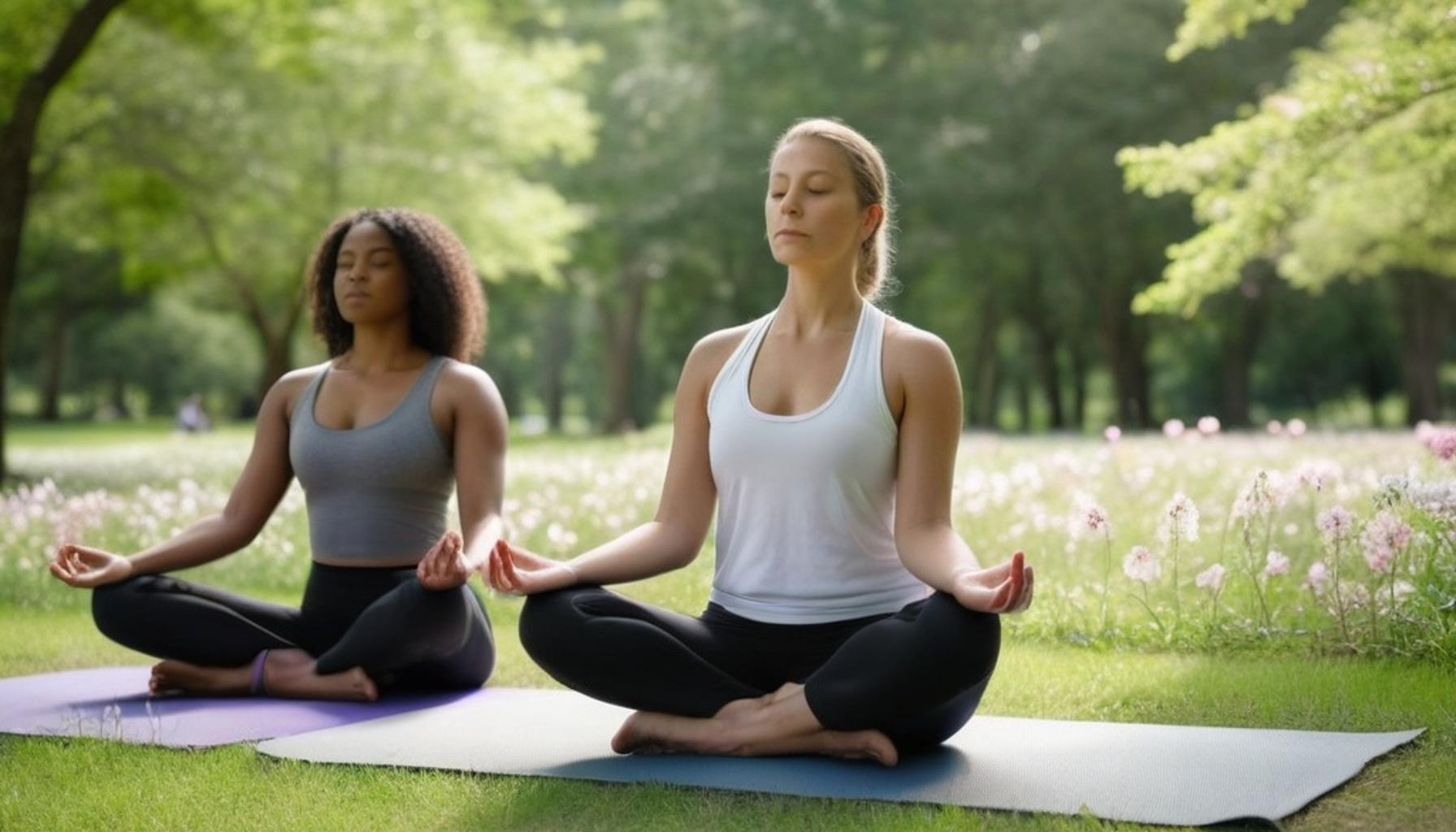
The Importance of Daily Meditation for Mental Health

Why Millions of Americans Are Turning to Stillness Every Morning
Stress levels in the United States have reached a breaking point. According to the American Psychological Association, 77% of Americans report experiencing stress that affects their physical health. Headaches, fatigue, muscle tension, and even chest pain are becoming everyday complaints, not rare exceptions. In response, a quiet revolution is taking place in homes, offices, and even schools across the country.
That revolution is daily meditation for mental health. What was once considered a niche spiritual practice, often associated with monasteries or yoga retreats, has become a mainstream tool for emotional survival in a fast-paced, always-connected society.
From Silicon Valley executives managing high-stakes decisions to New York City commuters squeezed onto crowded subway platforms, people are carving out just a few minutes a day to sit, breathe, and reset. Even professional athletes and military veterans have adopted the practice to manage pressure and trauma. But does it actually work, or is this just another wellness trend destined to fade?
What the Research Reveals
Scientific studies increasingly support what practitioners have long claimed. Meditation and mental wellness are deeply connected, with research showing measurable changes in brain structure after consistent practice. Brain scans reveal thickening in areas associated with self-awareness and emotional control, while regions linked to fear and anxiety appear to shrink over time.
Here’s what daily meditation has been shown to do:
- Reduce symptoms of anxiety and depression by up to 30%
- Lower cortisol levels, the body’s primary stress hormone
- Improve focus, memory, and emotional regulation
- Enhance sleep quality within just a few weeks of practice
- Strengthen immune response and reduce inflammation markers
These aren’t vague promises scribbled on a wellness blog. They’re findings backed by institutions like Harvard Medical School and Johns Hopkins University, where researchers have spent decades studying the physiological effects of contemplative practice using MRI technology and controlled clinical trials.
A Simple Practice With Serious Potential
Understanding how meditation improves mental health starts with recognizing its accessibility. No special equipment, no expensive membership, no prior experience required. A person can begin sitting quietly in a parked car during a lunch break or on the edge of a bed before the alarm even goes off.
This article explores practical meditation techniques for stress relief, the science behind the benefits, and how to build a sustainable daily habit that fits into even the busiest American schedule. The answers might surprise you, especially considering how little time it actually takes to start noticing a difference.
YOU MAY ALSO LIKE: The Importance of Mindfulness Practice in Mental Health and Well-Being
# The Science Behind Sitting Still: How the Brain Responds to Daily Practice
The human brain was not designed for the modern American lifestyle. Constant notifications, overflowing inboxes, and the pressure to always be “on” have created a nervous system perpetually stuck in overdrive. This is precisely where daily meditation for mental health steps in, offering the brain something it desperately craves: a pause button.
Neuroscientists at institutions like Harvard and UCLA have used functional MRI scans to observe what happens inside the skull when someone meditates consistently. The results are striking. After just eight weeks of practice, the amygdala, the brain’s alarm system responsible for triggering fear and stress responses, showed measurable shrinkage in study participants. Meanwhile, the prefrontal cortex, which governs decision-making and emotional regulation, became noticeably more active.
This is not a placebo effect. It is meditation and mental wellness intersecting at a biological level, rewiring neural pathways in ways that medication alone often struggles to achieve.
Why Stress Responses Get Hijacked in Modern Life
Consider a typical Tuesday for someone living in Chicago or Dallas. A delayed train, a tense email from a supervisor, a traffic jam on the interstate. None of these situations involve physical danger, yet the body reacts as if it does. Heart rate spikes. Cortisol floods the bloodstream. Muscles tighten.
This is the fight-or-flight response, a survival mechanism that once protected humans from predators. Today, it is triggered by Slack messages and school pickup lines instead.
Understanding how meditation improves mental health means recognizing that consistent practice essentially retrains this response. Instead of reacting instantly to every stressor, the brain learns to pause, assess, and respond with more control.
Clinical studies have identified several concrete outcomes tied to this retraining process:
- Faster recovery time after stressful events, sometimes cutting reaction duration in half
- Reduced activity in the brain’s default mode network, linked to rumination and anxious overthinking
- Increased gray matter density in regions tied to compassion and self-regulation
- Greater resilience when facing unexpected life disruptions, from job loss to health scares
Not Just Relaxation, But Rewiring
Many people assume meditation simply feels nice, like a mental massage. But the benefits of daily meditation go far beyond temporary relaxation. This is structural, measurable change happening inside the skull.
A landmark study published by Johns Hopkins in 2014 analyzed nearly 19,000 participants across 47 clinical trials. Researchers concluded that mindfulness meditation benefits were comparable to antidepressant medication for treating moderate anxiety and depression symptoms, without the side effects often associated with pharmaceutical treatment.
That finding alone has prompted psychiatrists and primary care physicians across the country to start recommending meditation apps alongside, or sometimes instead of, traditional prescriptions.
What Happens When Practice Becomes Habit
Skeptics often ask a fair question: how long does it actually take before someone notices a difference? Researchers at the University of Wisconsin-Madison tracked long-term meditators, some with over 10,000 hours of practice, and compared their brain scans to beginners. The veterans showed dramatically different patterns of neural activity, particularly in regions associated with attention span and emotional stability.
But the encouraging part of this research is that transformation does not require monk-level commitment. Even short daily sessions, somewhere between ten and twenty minutes, produced measurable shifts within weeks. This is not about achieving perfect stillness or silencing every thought. It is about repetition, the same way lifting weights gradually builds muscle over time.
Corporate wellness programs across the country, from tech companies in Silicon Valley to insurance firms in Ohio, have taken notice. Employee meditation breaks are increasingly treated as a productivity tool rather than a soft perk, backed by data showing reduced burnout and fewer sick days.
Where the Research Goes Next
Scientists caution that meditation is not a cure-all. Severe mental health conditions still require comprehensive treatment plans that may include therapy, medication, or both. However, as a complementary practice, the evidence continues to mount in favor of consistency over intensity.
What remains clear is that the brain is far more adaptable than once believed. Sitting still, breathing deliberately, and observing thoughts without judgment appears to trigger changes that rival some of modern medicine’s most trusted interventions. For a nation defined by hustle culture, that discovery alone might be worth a closer look.

Key Aspects of Daily Meditation for Mental Health
Understanding daily meditation for mental health becomes easier when broken into its core components. The table below highlights essential categories and their corresponding benefits, offering a quick reference before diving deeper into how mindfulness meditation benefits the mind and body.
| Category | Key Benefit or Insight |
|---|---|
| Stress Reduction | Lowers cortisol levels, easing tension within minutes of practice |
| Emotional Balance | Improves mood regulation and reduces anxiety symptoms over time |
| Focus & Clarity | Sharpens concentration through consistent mindfulness meditation benefits |
| Sleep Quality | Promotes deeper rest by calming an overactive nervous system |
| Long-Term Wellness | Builds resilience, showing how meditation improves mental health over months |
These categories only scratch the surface of meditation and mental wellness. Each element connects to broader physiological and psychological changes worth exploring further.
DIVE DEEPER: Click here to discover the benefits of plant-based diets
# From Anxiety to Insomnia: Real Conditions Meditation Actually Targets
Walk into any pharmacy in America and the shelves tell a story. Sleep aids, anxiety supplements, and stress-relief gummies occupy entire aisles. Yet a growing number of physicians are pointing patients toward something that costs nothing and requires no prescription refill.
Daily meditation for mental health has moved from wellness fad to clinical recommendation, and the specific conditions it addresses are worth examining in detail.
Anxiety Disorders and the Racing Mind
Generalized anxiety disorder affects over 6.8 million adults in the United States, according to the Anxiety and Depression Association of America. For many of these individuals, the mind operates like a browser with forty tabs open simultaneously.
Specific meditation techniques for stress relief have shown particular promise here. Body scan meditation, where practitioners mentally trace sensations from toes to scalp, interrupts the spiraling thought patterns that fuel anxious episodes.
A 2018 study from Massachusetts General Hospital found that participants practicing this technique for just fifteen minutes daily reported a 39 percent reduction in anxiety symptoms after six weeks. That is not a marginal improvement. That is life-altering for someone who previously avoided grocery stores or work meetings out of dread.
The Insomnia Connection Nobody Talks About
Roughly 70 million Americans struggle with chronic sleep issues. Scrolling through late-night forums reveals countless people describing the same frustrating loop: lying awake, mind racing, watching the clock tick toward another exhausting morning.
Sleep specialists have started prescribing meditation apps alongside, or instead of, sedative medications. The reasoning is straightforward. Meditation lowers cortisol before bedtime, essentially telling the nervous system it is safe to power down.
Patients using guided meditation before sleep report several consistent improvements:
- Falling asleep an average of 20 minutes faster than non-practitioners
- Fewer middle-of-the-night awakenings caused by racing thoughts
- Reduced reliance on over-the-counter sleep medications within three months
- Improved mood upon waking, likely tied to more consolidated sleep cycles
Workplace Burnout Finds an Unlikely Remedy
Burnout was officially recognized by the World Health Organization as an occupational phenomenon, not simply exhaustion that disappears after a weekend off. American workers, particularly in high-pressure industries like healthcare and finance, report burnout rates exceeding 40 percent in recent surveys.
Hospitals in cities like Boston and Seattle have introduced mandatory meditation breaks for nursing staff, citing improvements in both retention and patient care quality. This shift represents a broader recognition that meditation and mental wellness are not separate from professional performance but deeply intertwined with it.
Depression: A More Complicated Relationship
Unlike anxiety and sleep disruption, depression presents a more nuanced picture. Some individuals experiencing severe depressive episodes find sitting in silence with their thoughts counterproductive, at least initially.
This is where understanding how meditation improves mental health requires nuance rather than blanket assumptions. Therapists often recommend movement-based mindfulness, like walking meditation, before introducing seated stillness practices for depressive patients.
Once foundational stability is established, however, research consistently shows that the mindfulness meditation benefits extend into sustained mood regulation, reducing the frequency and severity of depressive relapses over time.
DISCOVER MORE: Click here to learn about sleep hygiene and its impact on mental health
The Bottom Line on a Practice That Refuses to Fade
Skeptics once dismissed meditation as incense-and-candles territory, disconnected from real medicine. That narrative has collapsed under the weight of clinical evidence coming from institutions like Massachusetts General Hospital and hospital systems across Boston and Seattle.
What emerges from this research is not a miracle cure but something arguably more valuable: a consistent, low-risk tool that addresses anxiety, insomnia, workplace burnout, and depressive relapse through distinct mechanisms rather than a single blanket effect.
The benefits of daily meditation reveal themselves differently depending on what a person brings to the cushion. Someone battling racing thoughts at 2 a.m. experiences relief through lowered cortisol. A burned-out nurse in a Seattle hospital experiences it through restored emotional bandwidth. Neither outcome cancels out the other; they simply reflect how adaptable this practice actually is.
What deserves more attention going forward is accessibility. Unlike prescription medications requiring insurance approval and pharmacy visits, meditation asks only for time and a willingness to sit with discomfort temporarily.
That said, this is not a call to abandon therapy or medication where they are clinically necessary. Rather, it is an invitation to see meditation and mental wellness as complementary forces, not competing ones.
Readers curious about starting should consider these practical entry points:
- Begin with five minutes daily rather than attempting thirty immediately
- Choose a specific technique based on the condition being addressed, whether body scans for anxiety or walking meditation for depressive symptoms
- Track sleep and mood patterns over six weeks to notice measurable shifts
The pharmacy aisles are not going anywhere. But for millions of Americans, the most effective intervention might already be available, requiring nothing more than a quiet room and consistent practice.
Frequently Asked Questions
How long should I meditate each day to see mental health benefits?
Research suggests that just 10 to 20 minutes of daily meditation can reduce symptoms of anxiety and depression over time. Consistency matters more than duration, so even short daily sessions practiced regularly tend to outperform occasional longer sessions. Beginners often start with 5 minutes and gradually increase as the habit becomes easier to maintain.
Can daily meditation replace therapy or medication for anxiety and depression?
Daily meditation for mental health is a powerful complementary tool, but it is not a substitute for professional treatment like therapy or medication in moderate to severe cases. Many mental health professionals recommend combining meditation with clinical care for the best results. Always consult a doctor or therapist before adjusting any existing treatment plan.
What is the best time of day to meditate for stress relief?
Morning meditation is popular because it sets a calm tone before daily stressors arise, but evening sessions can help process the day’s tension and improve sleep quality. The most important factor is choosing a consistent time that fits your schedule so the habit sticks. Some people even benefit from short midday sessions to reset during high-stress workdays.
How quickly will I notice improvements in my mental health from meditating daily?
Some people report feeling calmer and less reactive within the first one to two weeks of daily meditation for mental health. More significant changes in anxiety, mood regulation, and stress resilience typically appear after 8 weeks of consistent practice, according to studies on mindfulness-based interventions. Results vary by individual, so patience and regular practice are key.

Linda Carter
Linda Carter is a writer specializing in healthy habits and balanced living. With extensive experience helping readers build sustainable routines, she shares practical guidance on nutrition, physical activity, quality sleep, stress management, and emotional well-being. Her goal is to offer simple, accessible strategies that inspire people to care for their health and enjoy a more balanced life.