The Psychology of Puzzle Solving: How Mental Challenges Increase Creativity
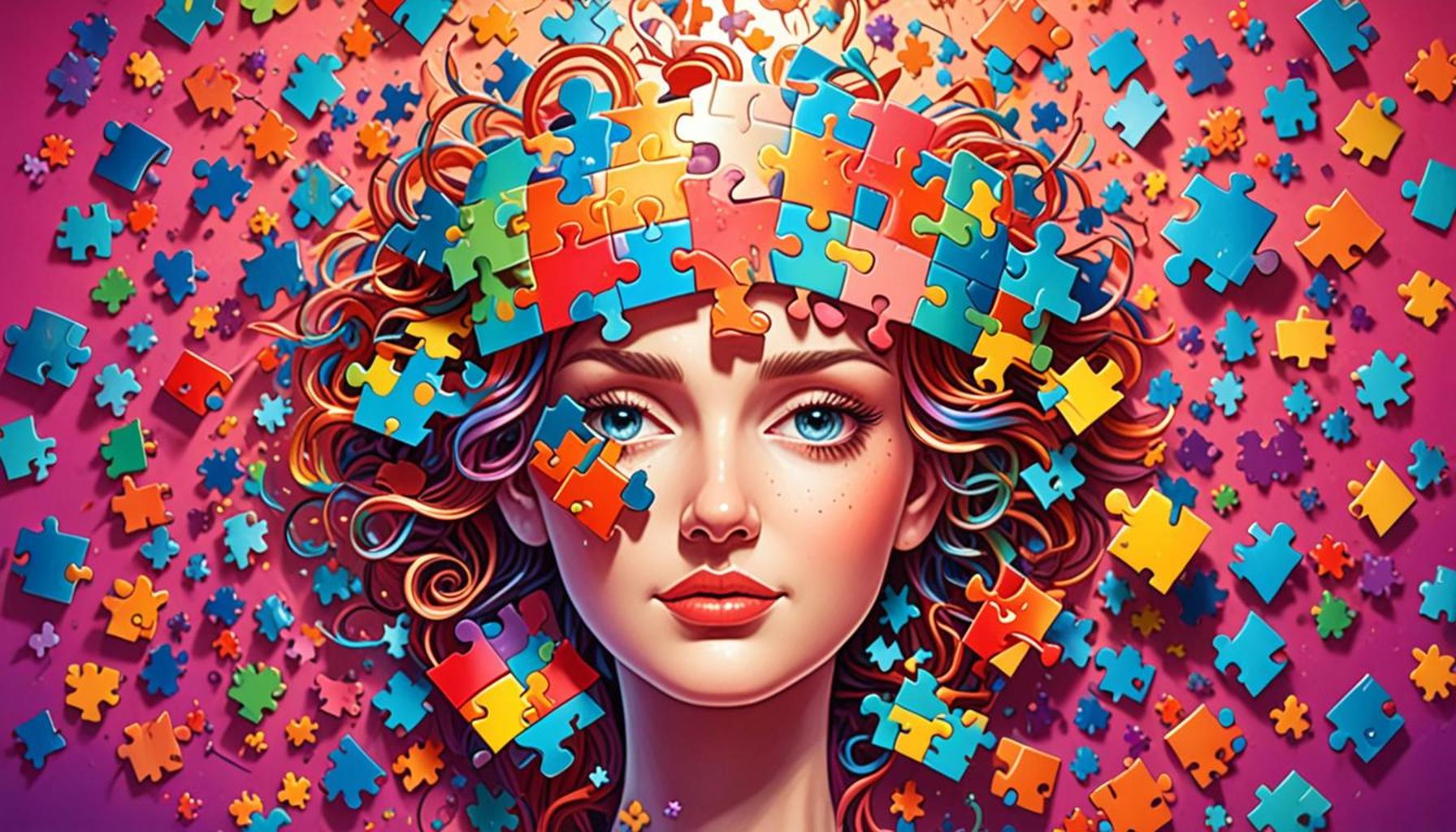
The Cognitive Benefits of Engaging with Puzzles
Engaging with puzzles is more than a pastime—it’s a *cognitive workout* that can enhance creativity. Studies reveal a fascinating link between puzzle solving and the brain’s ability to think outside the box. As individuals grapple with these challenges, they are not just passing time; they’re effectively training their minds to approach problems from various angles. This mental engagement fosters a range of cognitive skills that can be beneficial in many facets of life.
Problem-Solving Skills
Tackling complex problems significantly boosts critical thinking abilities. For instance, when someone works on a Sudoku puzzle, they must use logical reasoning to fill in the blanks, often under spatial constraints. This practice translates well into real-life scenarios, such as strategizing for a project at work or planning logistics for a family event. The structured environment of puzzles requires players to consider multiple possibilities, enhancing their overall problem-solving acumen.
Neuroscience Insights
Neuroscience has provided insight into why puzzles are so effective in boosting cognitive function. Puzzles stimulate various brain regions, including those responsible for memory, logic, and language. Activities such as jigsaw puzzles or crosswords not only engage the logical side of the brain but also invoke creative thinking and memory recall. A study published in the journal *Neuropsychology Review* indicated that engaging with puzzles can lead to increased connectivity between different brain regions, fostering innovative ideas that can be applied in both personal and professional contexts.
Emotional Benefits
Beyond cognitive advantages, there are substantial emotional benefits associated with puzzle solving. Completing a challenging puzzle can lead to a remarkable sense of satisfaction and achievement, enhancing one’s mood and motivation. Engaging in these mental challenges can also act as a form of relaxation, reducing stress and anxiety. As an example, many individuals find that a nightly routine of puzzle-solving, whether through apps or traditional paper formats, serves as an excellent wind-down activity after a hectic day.
As it turns out, these *mental challenges* not only entertain but can significantly shape our creative processes. From crosswords to logic grids, these activities stimulate the brain and can lead to greater success in both personal and professional domains. The psychology behind puzzle solving reveals a treasure trove of benefits awaiting those willing to indulge in these fun yet challenging endeavors.

Join us as we delve deeper into the intriguing effects of *mental challenges* on creativity and explore the practical applications of this knowledge in our everyday lives. Whether it is through community puzzle events or personal milestones achieved via puzzle-solving, the journey is sure to be enlightening.
DISCOVER MORE: Click here to dive deeper
The Connection Between Puzzle Solving and Creativity
Puzzle solving is often perceived as simply a leisurely activity, yet it plays a significant role in enhancing creativity. The process of wrestling with a challenging puzzle can lead to breakthroughs in creative thinking, opening new pathways in the brain that foster innovation. When individuals engage with puzzles, they employ a variety of cognitive strategies that stimulate creative thought. This section explores how such mental challenges can ignite creativity and offer fresh perspectives in various realms.
Enhancing Divergent Thinking
Divergent thinking, which refers to the ability to generate multiple ideas and solutions, is one of the greatest benefits of engaging with puzzles. When faced with a puzzle—be it a crossword, a chess game, or a logic riddle—participants are compelled to think in ways that differ from their habitual patterns. For instance, a study conducted at the University of Michigan found that individuals who spent time on puzzles exhibited a marked increase in their ability to come up with unconventional ideas compared to those who engaged in more traditional forms of problem-solving. This divergence promotes flexibility in thinking, a crucial element of creativity.
Cognitive Flexibility: The Key to Creative Problem Solving
Another important aspect connecting puzzles and creativity is cognitive flexibility. This ability allows individuals to adapt their thinking when presented with new information or unexpected obstacles. Puzzles require solvers to navigate through challenges systematically, often requiring them to pivot their thought processes frequently. For example, participants in a jigsaw puzzle may initially believe a piece fits into a specific spot, only to realize that redirecting their approach is necessary for completion. Such flexibility, practiced through puzzles, strengthens the brain’s capacity to tackle unique and strenuous tasks in creative projects.
The Role of ‘Flow’ in Puzzle Solving
Moreover, puzzles can evoke a psychological state known as ‘flow’, a term coined by psychologist Mihaly Csikszentmihalyi. This state is characterized by complete immersion in an activity, resulting in a sense of enjoyment and satisfaction. When solving puzzles, individuals often lose track of time and become deeply engaged, allowing their creative juices to flow freely. Achieving this state can boost motivation and trigger inventive thinking. Engaging with puzzles can therefore act as a catalyst for creativity, melding concentration and enjoyment in a way that enhances overall brain function.
Practical Applications of Enhanced Creativity
The creativity sparked through puzzle solving has real-world implications. Consider the following scenarios where it can be leveraged:
- Workplace Innovation: Employees who regularly tackle puzzles may contribute innovative ideas that enhance productivity and problem-solving within teams.
- Artistic Ventures: Artists and designers often tap into the creative pathways strengthened by puzzle-solving, leading to unique artworks and designs.
- Education: Educational systems that incorporate puzzles in curricula can foster a generation of critical thinkers and problem solvers.
As we unravel the psychology behind puzzle solving, it becomes increasingly clear that these engaging challenges can radically transform the way we approach creativity and the myriad ways in which it can be applied across different domains.
The Cognitive Benefits of Puzzle Solving
Engaging in puzzles not only serves as a source of entertainment but also plays a significant role in bolstering creativity. The act of solving complex problems forces the brain to establish connections between seemingly unrelated concepts, thereby enhancing cognitive flexibility. This phenomenon is crucial for the creative process as it encourages individuals to explore various avenues for solutions, ultimately leading to innovative thoughts.
Puzzle Types and Their Unique Effects
Different types of puzzles have varied impacts on mental functions. For example, logic puzzles stimulate analytical thinking, while crossword puzzles enhance vocabulary and lateral thinking. Each type of puzzle engages distinct cognitive pathways, enriching the overall mental exercise. This diversity not only helps in sharpening the mind but also in promoting an enriching environment for creative endeavors.
Scientific Insights on Mental Challenges
Research supports the idea that mental challenges like puzzles can foster neuroplasticity—the brain’s ability to reorganize itself by forming new neural connections throughout life. Studies have shown that individuals regularly participating in challenging brain games exhibit improved problem-solving skills and higher creative output in various tasks. This correlation underscores the long-term benefits of nurturing creativity through mental challenges, suggesting that consistent engagement in puzzles may act as a preventive measure against cognitive decline.
The Social Aspect of Puzzle Solving
Moreover, solving puzzles can often be a collaborative effort, enhancing social interaction and teamwork. Group puzzle-solving introduces diverse perspectives, further augmenting creativity as participants bounce ideas off one another. This collaborative dynamic creates a fertile ground for brainstorming, leading to new insights and innovative concepts that may not have emerged in isolation.
| Category | Benefits |
|---|---|
| Cognitive Flexibility | Enhances ability to think outside the box. |
| Diverse Puzzles | Stimulates different aspects of creativity. |
| Neuroplasticity | Promotes lasting mental agility. |
| Social Interaction | Encourages teamwork and idea sharing. |
Through exploring these avenues, it becomes evident that engaging in mental challenges such as puzzles can dramatically influence and enhance creativity, providing a well-rounded cognitive workout for individuals of all ages.
DIVE DEEPER: Click here to enhance your puzzle-solving skills
The Impact of Social Interaction on Puzzle Solving and Creativity
Another fascinating aspect of puzzle solving is its potential to enhance creativity through social interaction. When individuals collaborate on puzzles, they not only share perspectives but also challenge each other’s thoughts and ideas. This collaborative environment can stimulate more robust creative thinking and problem-solving approaches. Research suggests that group problem-solving can lead to greater collective intelligence, as each member brings unique insights and skills to the table. In workplaces that prioritize teamwork, regular group puzzle-solving activities can encourage innovation and camaraderie among employees.
Community and Shared Experiences
The social dynamic of puzzle solving extends beyond the workplace. Community-driven activities, such as escape rooms or puzzle competitions, foster a spirit of collaboration and healthy competition. Participants often exchange strategies and thought processes, which can lead to unexpected solutions and insights. According to a study published in the Journal of Social Psychology, people who engage in group puzzles experience increased feelings of happiness and satisfaction, which directly correlates with enhanced creativity. When individuals find joy in the shared experience, their minds become free to explore new territories of thought.
Bridging Different Fields of Knowledge
Puzzles also serve as a bridge connecting different fields of knowledge, allowing creative thinkers to merge disparate ideas. For instance, a mathematical puzzle presented in a design studio could inspire fashion designers to create innovative patterns based on numerical sequences. This interdisciplinary connection highlights how solving puzzles can empower individuals to draw from various domains, encouraging innovative thinking. Engaging with puzzles can encourage a growth mindset, wherein failure is viewed as a stepping stone rather than a setback. This perspective fosters resilience and creativity, enabling one to approach challenges without the fear of failure.
Neuroscience Behind Puzzle Solving and Creativity
From a neurological standpoint, puzzle solving and creativity are intrinsically linked. Neuroimaging studies have shown that engaging in challenging puzzles activates the brain’s default mode network (DMN), which is crucial for creative thought. The DMN is active during daydreaming and mind wandering—often the breeding grounds for innovative ideas. When individuals engage with complex puzzles, the brain’s connectivity increases, leading to the formation of new synaptic pathways. This biological response enhances cognitive capabilities and encourages explorers of thought to push the boundaries of conventional thinking.
Challenges in Puzzle Solving as a Catalyst for Growth
Importantly, the challenges encountered during puzzle solving can instigate personal growth and resilience. Each misstep or failed attempt offers a valuable lesson, compelling individuals to re-evaluate their approaches and solutions. According to psychologist Carol Dweck, developing a growth mindset is pivotal for creativity, as it encourages individuals to embrace challenges rather than avoid them. Puzzles naturally facilitate this learning process, enabling solvers to cultivate grit and determination—qualities essential for creative success both personally and professionally.
As we delve into the intricate relationship between puzzle solving and creativity, it becomes clear that engaging with puzzles not only stimulates cognitive functions but also enriches social interactions, bridges knowledge domains, and encourages resilience. This multifaceted approach highlights the transformative potential of puzzles as tools that enhance creative expression across various walks of life.
DIVE DEEPER: Click here to unlock the secrets of strategic thinking
Conclusion: Unleashing Creativity Through Puzzles
In exploring the psychology of puzzle solving, we uncover a profound relationship between mental challenges and enhanced creativity. From the stimulating effects of collaboration and social interaction to the ways in which puzzles bridge disparate fields of knowledge, their impact is multifaceted. The joy derived from shared experiences in group settings not only fosters camaraderie but also enhances individual creativity, allowing participants to access a broader spectrum of thought.
Moreover, recent neuroscience findings illuminate the mechanics behind this phenomenon; the activation of the default mode network (DMN) during challenging puzzles reveals a biological basis for creative thought. As individuals face hurdles in their problem-solving journey, they cultivate resilience and a growth mindset. Each challenge becomes a stepping stone toward personal and professional development, reinforcing the notion that failure is not an endpoint but a crucial part of the creative process.
Ultimately, embracing puzzle-solving activities can serve as a catalyst for both personal fulfillment and collective innovation. Whether at home, in educational settings, or within workplaces, integrating puzzles into daily routines may unlock new pathways of thought and creativity. As we harness the essence of puzzles, we open the door to limitless possibilities in the realms of imagination and exploration. This is a call to action for everyone to engage with puzzles, not just as a pastime, but as powerful tools for stimulating the mind and expanding creative horizons.