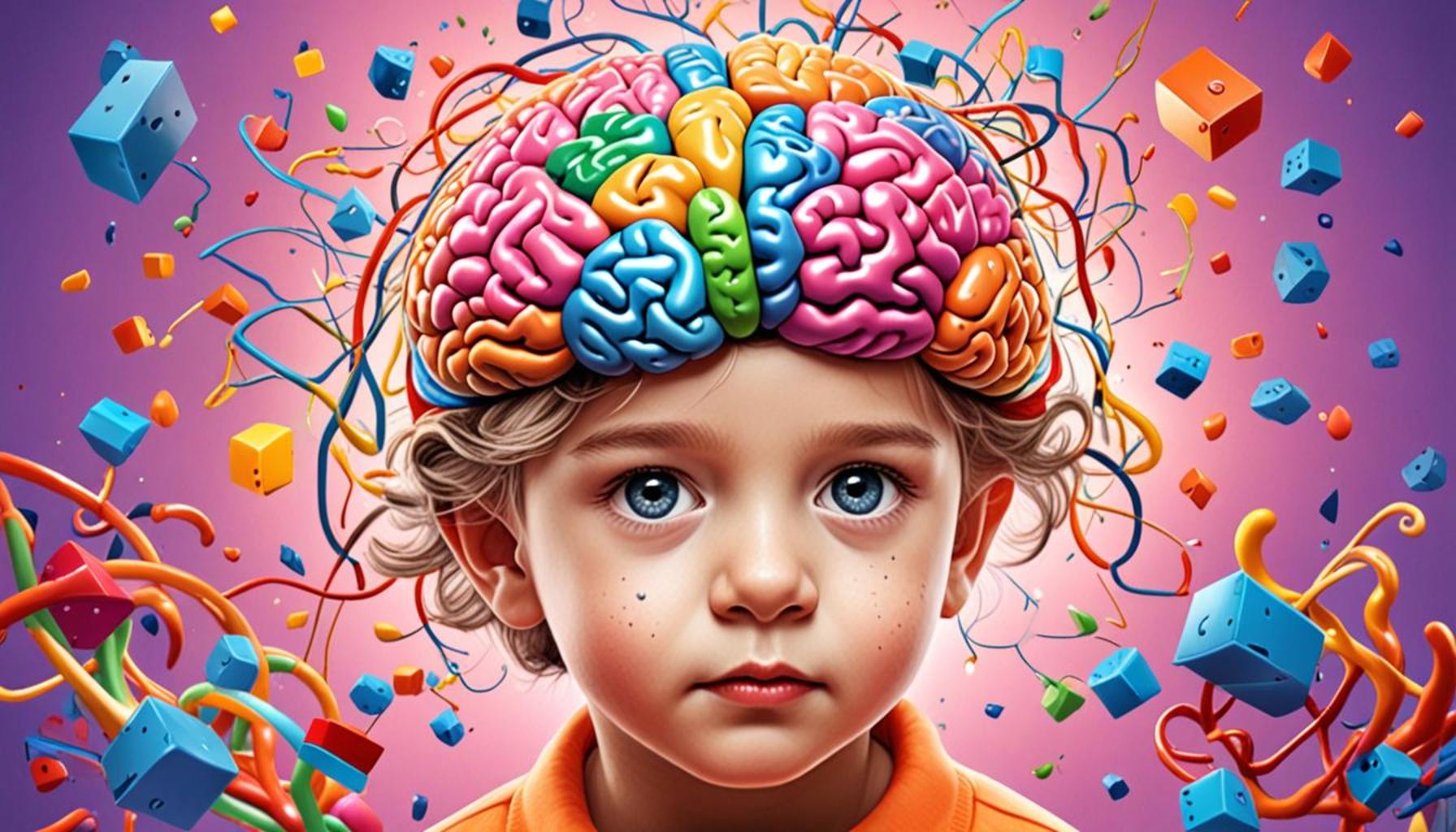
The Impact of Brain Games on Cognitive Skill Development in Children

Unlocking Potential Through Play
In a world increasingly dependent on cognitive skills, brain games are gaining attention as valuable tools for enhancing children’s cognitive development. These interactive experiences not only entertain but also contribute significantly to mastering vital cognitive abilities. By captivating children’s interest, brain games can create enriching learning moments that extend far beyond traditional educational methods.
Research indicates that engaging in structured play can yield impressive benefits. When children participate in brain games, they often showcase improvements in several key cognitive areas. For instance, children who regularly engage in these activities may experience:
- Improved Memory: Regular mental challenges lead to enhanced recall abilities and increased retention of information. Games like Simon Says or the classic card game Memory drill young players on remembering sequences and locating pairs, sharpening their memory skills in an enjoyable format.
- Critical Thinking Skills: Brain games encourage children to analyze problems and devise solutions independently. Strategy-driven games such as chess or checkers stimulate logical thinking and strategic planning. These activities allow children to weigh options and evaluate outcomes, skills essential for real-world decision-making.
- Boosted Attention Span: Engaging with brain games can help children concentrate longer and face less distraction during tasks. Activities like building complex Lego structures or solving intricate puzzles require sustained focus, helping to train the brain’s attention circuits effectively.
Moreover, these games often combine learning with fun, providing an interactive experience that keeps children engaged. The blend of enjoyment and intellectual challenge makes children more likely to participate eagerly. Popular examples of brain games include:
- Puzzles and strategy games like Settlers of Catan which promote resource management and negotiation skills.
- Memory matching games, which not only entertain but also train visual memory and recall skills.
- Math and logic challenges such as Math Bingo or Sudoku that sharpen mathematical reasoning while reinforcing basic arithmetic.
As parents and educators seek effective ways to support cognitive growth, understanding the impact of brain games becomes essential. Their ability to develop foundational cognitive skills is significant, highlighting a necessity for these kinds of activities in daily routines. This exploration not only sheds light on their advantages but also guides towards creating a conducive learning environment for our children, encouraging further investigation into the myriad of brain-boosting resources available in today’s educational landscape.
DISCOVER MORE: Click here to learn how puzzles can calm your mind

Cognitive Development Through Engaging Activities
The field of cognitive development is rapidly evolving, with researchers demonstrating how brain games can play a pivotal role in enhancing mental capabilities in children. By combining fun with mental challenges, these games serve not only as a source of entertainment but also as effective tools for fostering vital cognitive skills. Children who engage in brain games regularly exhibit marked improvements across various cognitive dimensions, which are essential for their overall growth.
One significant benefit of these interactive activities is the enhancement of problem-solving skills. Children flourish when they are required to think creatively and devise strategies. For instance, games that involve riddles or escape room challenges motivate children to think outside the box, identifying novel solutions to complex problems. According to a study published in the journal Developmental Psychology, children who regularly engage in these kinds of activities are better at applying logical reasoning in real-life situations, enhancing their decision-making capabilities.
In addition to problem-solving, social skills play a crucial role in childhood development, and many brain games facilitate collaborative play. Multiplayer games, whether they take place in person or online, require children to communicate effectively with their peers, negotiate tactics, and manage conflicts. Games such as Team Fortress or Among Us can also offer lessons in trust and teamwork, which are invaluable in both academic and social settings. Researchers at the University of California have found that collaborative games not only improve social skills but also enhance emotional intelligence, a crucial factor in a child’s development.
Furthermore, the act of playing brain games encourages creativity, allowing children to express themselves in innovative ways. Many games, such as those involving storytelling or role-playing, prompt children to invent characters and plot lines, nurturing their imaginative capabilities. A longitudinal study by the Harvard Graduate School of Education indicated that children exposed to creative play exhibit increased cognitive flexibility, which is the ability to adapt thinking to new, changing, or unexpected events.
Notably, the cognitive advantages derived from playing brain games are not limited to just academic performance. They also prepare children for future challenges in an ever-evolving world. For instance, skills developed through gaming, such as quick thinking, adaptability, and resilience, are increasingly important in today’s technology-driven society.
As more parents and educators recognize the importance of cognitive skill development in children, incorporating brain games into daily routines emerges as a practical strategy. With countless options available, from digital apps to board games, the challenge lies in selecting appropriate games that align with educational goals while catering to children’s interests. By doing so, parents can cultivate an environment where children thrive intellectually, socially, and emotionally, ultimately unlocking their full potential.
The Benefits of Brain Games for Cognitive Development
Brain games have become an essential part of enhancing cognitive skills among children. Engaging children in these mental exercises not only fosters entertainment but also nurtures critical thinking, memory retention, and problem-solving abilities. The interactive nature of brain games allows for a dynamic learning environment, encouraging children to delve deeper into concepts that they might find troublesome in traditional educational settings.Additionally, brain games can significantly improve concentration levels. As children navigate through various challenges, their ability to focus amidst distractions is put to the test, leading to enhanced attention spans that translate into improved academic performance. Research indicates that regular engagement with these brain-stimulating activities can even lead to neural growth, reflecting the importance of cognitive challenges in childhood development.Furthermore, these games can be tailored to meet different age groups and skill levels, making them an adaptable tool for parents and educators alike. From simple puzzles to complex strategy games, the variety ensures that children remain engaged and motivated to learn. By scaffolding their cognitive skills in a playful manner, brain games not only aid development but also create a positive association with learning.To illustrate the vast potential of brain games, consider this informative table that highlights some key advantages:
| Advantages of Brain Games | Key Features |
|---|---|
| Enhanced Problem-Solving Skills | Games often present challenges that require critical thinking and strategy. |
| Improved Memory Retention | Regular play can strengthen both short and long-term memory capabilities. |
Incorporating brain games into daily routines can serve as a valuable investment in the cognitive growth of children. By weaving learning into the fabric of play, parents can help their children build a foundation for lifelong learning and skill development. The significance of these activities in shaping young minds is undeniable, offering an exciting avenue for exploration and growth.
DON’T MISS OUT: Click here to enhance your child’s cognitive skills
Enhancing Critical Thinking and Memory Skills
Beyond the realms of problem-solving and creativity, brain games significantly contribute to the development of critical thinking skills. These games often present various scenarios that require children to analyze information, draw conclusions, and evaluate case-specific strategies. For example, strategy-based games like Chess and Settlers of Catan force players to assess numerous potential outcomes, promoting foresight and strategic planning. A meta-analysis in the journal Frontiers in Psychology reported that children who participated in strategic gaming demonstrated marked improvement in critical questioning skills and the ability to assess risks effectively.
Memory enhancement is another key cognitive skill that brain games can foster. Memory-oriented games often employ techniques such as memorization of patterns, sequences, and information recall, which help enrich a child’s cognitive landscape. For instance, games such as Simon Says or classical card-matching games not only improve short-term memory retention but also aid in developing long-term memory capabilities. According to research conducted by the American Psychological Association, playing memory-based games can lead to a measurable enhancement in children’s ability to retain and retrieve information, an essential skill for academic success.
Moreover, increasingly complex brain games have begun to incorporate elements of mathematics and logic, allowing children to develop foundational skills in these critical areas. Puzzle games that require numerical problem solving or logical reasoning challenges children to engage not only their imaginations but also their analytical minds. Games like Math Blaster or app-based challenges like Prodigy effectively integrate math skills into dynamic environments, making learning both fun and impactful. Research reported in the Journal of Educational Psychology reveals that students who frequently engage with math-based brain games show significant enhancement in mathematical reasoning and problem-solving speed.
Another underexplored advantage of brain games is their capability to bolster self-regulation and focus. Many games necessitate sustained attention and concentration, pushing children to better manage their impulses and maintain focus for extended periods. For instance, strategy games that require players to wait for their turn before making moves teach patience, while games designed around time constraints help improve the ability to prioritize tasks and make quick decisions. The University of Illinois conducted a study highlighting that children engaged in focus-driven games displayed improved attention spans and self-control, which are instrumental in academic and social success.
Furthermore, incorporating the use of brain games within educational systems can provide teachers with innovative tools to apply differentiated instruction tailored to varying learning styles. By observing students’ interactions with these games, educators can gain insight into individual cognitive strengths and weaknesses, thereby refining their approach to meet each student’s unique needs effectively. Research from the Stanford Graduate School of Education suggests that classrooms utilizing brain games see enhanced engagement levels, as well as improved overall classroom dynamics.
In summary, brain games offer a multifaceted approach to enhancing cognitive skills in children. By blending entertainment with educational frameworks, these games can empower young minds, equipping them with the essential abilities required to navigate increasingly complex academic landscapes and life challenges.
DIVE DEEPER: Click here to challenge your child’s mind
Conclusion: Unlocking Potential Through Brain Games
In conclusion, the exploration of brain games reveals their profound impact on cognitive skill development in children. By integrating elements of critical thinking, memory enhancement, and mathematical reasoning, these engaging activities transform learning into an enjoyable yet productive experience. The evidence is compelling; children who regularly engage in brain games exhibit improved analytical abilities, better memory retention, and heightened focus—skills that are crucial not only in academic settings but also in everyday life.
The transformation of learning methodologies through brain games offers educators innovative strategies to cater to diverse learning styles. By utilizing these tools, teachers are better equipped to identify and nurture individual strengths, ultimately fostering an inclusive environment that promotes cognitive growth. Moreover, the incorporation of brain games into educational curricula can lead to more dynamic classroom interactions, enhancing student motivation and participation.
As parents, educators, and policymakers recognize the significance of this cognitive engagement, the potential for widespread implementation grows. The role of brain games in cultivating essential skills is not just a fleeting trend but a substantial advancement in the way we approach childhood education. With ongoing research and development in this area, there remains much to understand about the interplay between play and learning.
For those interested in fostering the upcoming generation’s cognitive capabilities, the journey begins with a simple question: how can we continue to harness the benefits of play to unlock our children’s fullest potential? With the right approach, brain games will undoubtedly play a pivotal role in shaping capable, innovative thinkers for the future.