How Puzzles Enhance Problem-Solving Abilities in Adults
The Cognitive Benefits of Engaging with Puzzles
Puzzles have captivated people for generations, but their value stretches far beyond entertainment. Engaging with a variety of puzzles can significantly enhance problem-solving abilities in adults, making them more adept at cognitive tasks and improving mental agility. Whether it’s a crossword puzzle on the Sunday morning newspaper or a complex 1000-piece jigsaw, the benefits of these brain teasers are substantial and wide-ranging.
Numerous studies have shown that solving puzzles engages a unique intersection of skills that contribute to our cognitive development. By working through the challenges posed by puzzles, individuals are likely to enhance the following mental faculties:
- Critical thinking: Puzzles compel us to analyze complex problems systematically. For example, in solving a logic puzzle, one must draw inferences from various clues to arrive at the correct conclusion.
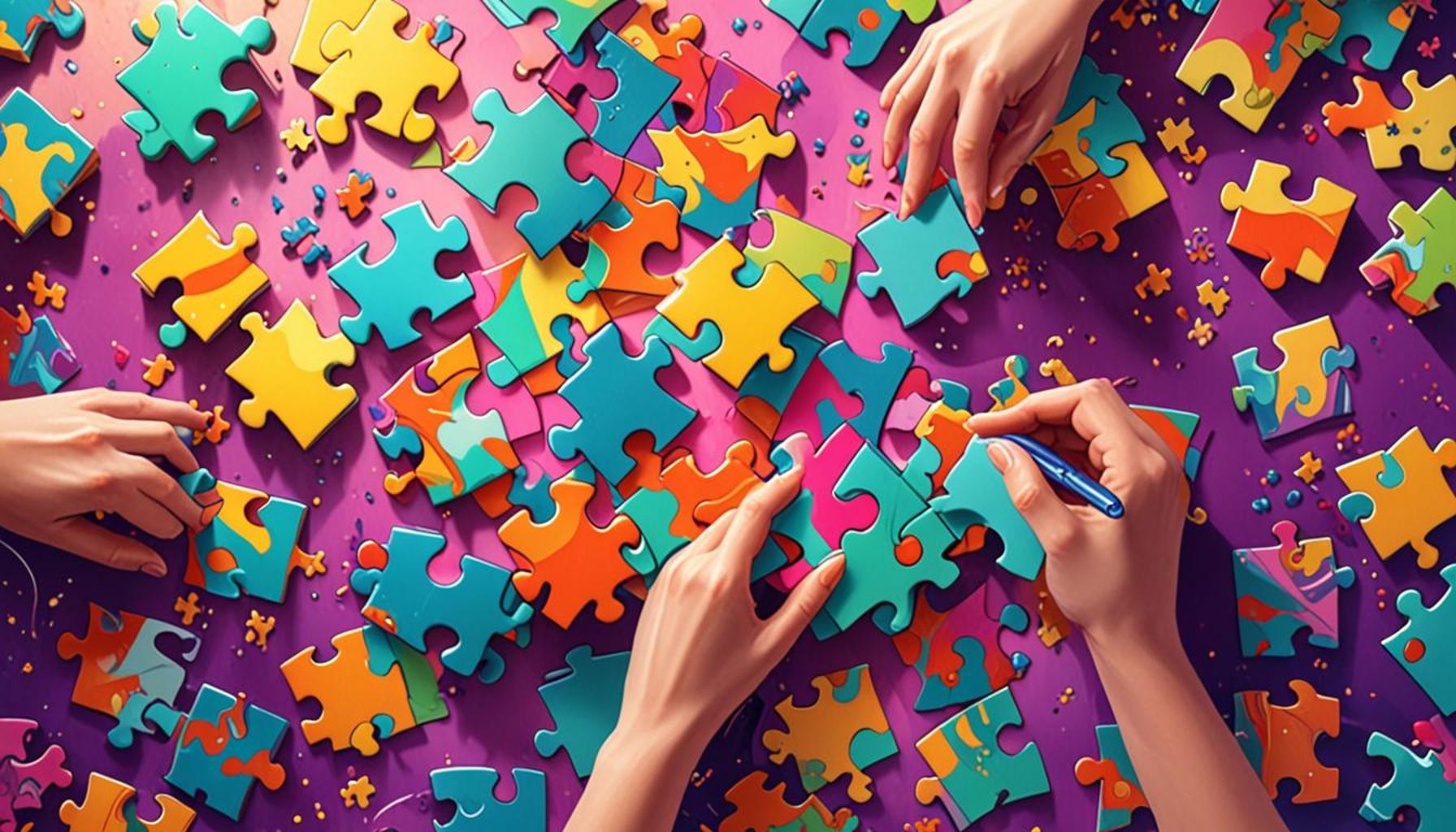
- Spatial reasoning: This skill is developed through activities like jigsaw puzzles, where visualizing how pieces interconnect is essential for completion.
- Memory retention: When tackling Sudoku or crossword puzzles, keeping track of potential answers, previous attempts, and logical pathways strengthens memory capabilities.
In the rapidly changing environment of today, possessing these skills is not just an asset but a necessity. Puzzles promote not only individual skill development but also characteristics that are invaluable in both professional and personal arenas:
- Persistence: Overcoming challenging puzzles fosters resilience, teaching individuals to tackle difficult problems without immediately succumbing to frustration.
- Creativity: Engaging with puzzles encourages thinking outside the box. For instance, a unique approach may be required to solve a complex brain teaser that conventional methods fail to address.
- Collaboration: Many puzzles are best solved in groups, enhancing teamwork skills as individuals share their diverse strategies and insights — an essential part of any workplace.
The relevance of puzzles in addressing everyday challenges cannot be overstated. Adults are consistently confronted with intricate problems in their careers and life, making the practice of puzzle-solving even more beneficial. From classic jigsaw puzzles that become a family tradition to the mental workout of a timed escape room, the avenues for enhancement through puzzles are virtually endless.
Incorporating puzzles into your daily routine not only serves as an entertaining distraction but can lead to impressive improvements in problem-solving capabilities. So the next time you encounter a puzzle, remember you are not just passing the time; you are actively strengthening your mind, sharpening your skills, and preparing yourself for success in a world that increasingly demands quick and effective problem-solving strategies.
DISCOVER MORE: Click here to learn about the calming effects of puzzles
The Mechanics of Problem Solving Through Puzzles
At its core, solving puzzles is a multi-layered cognitive process that actively engages the brain in various ways. When adults approach a puzzle, they are not merely filling in blanks or fitting pieces together; they are navigating a complex web of logic, patterns, and strategies. This deep engagement with challenges offers a powerful opportunity to hone essential problem-solving skills.
One of the fundamental aspects of effective problem-solving is the ability to understand and dissect a problem. Puzzles require individuals to evaluate the pieces of information presented to them critically. For instance, in a crossword puzzle, a clue provides an incomplete picture that demands the solver’s knowledge and extensive thinking to arrive at a plausible answer. This sort of mental exercise not only bolsters comprehension but also fosters a structured way of thinking, illustrating how intricately connected the processes of reasoning and solution generation are.
Moreover, puzzles provide an immediate feedback loop that enhances learning. According to researchers at the University of Cambridge, solving puzzles creates a dance between trial and error, fostering an environment where mistakes are not just tolerated but celebrated as a part of the learning process. Each misstep in a jigsaw puzzle or an incorrectly guessed crossword answer encourages the individual to re-evaluate their approach and adapt their strategies. This dynamic approach is critical in real-world problem-solving, where one must often pivot strategies in the face of new information.
As adults increasingly navigate a world filled with complex challenges, the ability to approach problems with flexibility becomes indispensable. Here are some key skills that puzzles help to sharpen:
- Analytical Skills: Breaking down a puzzle into smaller, manageable components allows solvers to dissect larger problems effectively. Each piece of the puzzle teaches analytical thinking.
- Pattern Recognition: Many puzzles require solvers to identify and exploit patterns, a skill that translates seamlessly to understanding trends and data in professional environments.
- Decision-Making: Deciding which piece to try next in a jigsaw or which word fits where in a crossword enhances decision-making abilities, reducing decision paralysis in real-life scenarios.
Furthermore, engaging with puzzles offers a safe space for experimenting and hypothesizing. Adults are often under pressure to deliver solutions quickly and accurately in their professional lives. Puzzles provide a low-stress environment where they can explore different approaches, test their effectiveness, and learn through experience. The courage to challenge oneself is continually reinforced, which is crucial for personal and professional growth.
In a world where cognitive demands are continually increasing, cultivating problem-solving skills through the practice of puzzles is not merely a leisure activity; it is an investment in one’s mental acuity. The more time adults spend grappling with puzzles, the more adept they become in tackling the multifaceted challenges that life throws their way. The benefits extend far beyond the confines of puzzling, enabling individuals to thrive in both their personal lives and their careers.
Puzzles, often underrated in their importance, can transform the way adults approach challenges and solve problems. As we engage in solving a puzzle, our brain is put through rigorous training. This mental exercise is akin to a workout for our cognitive functions. Not only do puzzles enhance our analytical capabilities, but they also play a critical role in improving our memory and concentration. The act of piecing together fragments requires us to remember shapes, colors, and overall design, thus sharpening our retention skills.
Moreover, engaging with puzzles fosters creative thinking. When faced with a particularly challenging question, adults often find themselves thinking outside the box to arrive at a solution. The more complex the puzzle, the more innovative the approach tends to be, expanding one’s ability to devise strategies in real-world situations.
Furthermore, puzzles can serve as excellent stress relievers. They provide a focused distraction from daily pressures, allowing adults to unwind while still enhancing their cognitive agility. As one immerses themselves in a puzzle, they experience a flow state, which is defined by heightened focus and efficiency. This aspect of puzzle-solving not only aids in stress reduction but also promotes a sense of fulfillment upon reaching the end. By incorporating puzzles into daily routines, adults do not just enhance their problem-solving abilities but also invest in their overall mental well-being.
| Advantages | Details |
|---|---|
| Enhances Cognitive Skills | Puzzles promote critical thinking and logical reasoning. |
| Boosts Creativity | Solving complex puzzles encourages innovative thinking. |
| Reduces Stress | Provides a mental break, enhancing focus and efficiency. |
DIVE DEEPER: Click here to discover fun brain teasers!
The Social and Emotional Benefits of Puzzle Solving
Beyond the cognitive enhancements provided by puzzles, there is a profound social and emotional dimension worth exploring. Solving puzzles is often seen as a solitary activity; however, many adults engage in puzzles with family, friends, or even in community groups, which fosters collaborative problem-solving skills. According to a study published in the Journal of Social Psychology, engaging in group activities like puzzle-solving enhances teamwork and communication skills, essential components of effective problem resolution in both personal and professional relationships.
When adults collaborate on a puzzle, they engage in healthy discussions, negotiating different perspectives while refining their ideas. For instance, a group tackling a complex Sudoku puzzle may debate potential solutions or analyze patterns together, thereby sharpening their collective ability to solve complicated problems. This collaborative aspect promotes a sense of camaraderie, building social connections that extend beyond the puzzle board. Feeling part of a group working towards a common goal can elevate motivation levels and encourage individuals to approach problems more positively.
Additionally, the emotional resilience developed through puzzle-solving cannot be overlooked. Puzzles inherently come with challenges and uncertainties—pieces that simply don’t fit or clues that lead nowhere. The experience of grappling with these obstacles enables adults to deal with frustration effectively, teaching them perseverance and the ability to maintain focus in the face of adversity. Research from the American Psychological Association indicates that tackling complex tasks helps individuals build mental fortitude, essential for managing stress and coping with life’s unpredictabilities.
Puzzles also tap into the critical skill of self-regulation. Working on puzzles requires one to manage emotions, especially if they encounter difficult sections. The ability to remain calm and composed under pressure translates seamlessly into real-life situations. Adults often find themselves in scenarios where emotional calmness can lead to better decision-making and problem-solving outcomes, whether in business negotiations or personal conflicts.
Moreover, puzzles can serve as an excellent tool for enhancing cognitive flexibility. As one navigates through a challenging problem—be it an intricate logic puzzle or a complicated crossword—shifting strategies or reconsidering initial approaches becomes necessary. This adaptability is essential for handling unexpected challenges in everyday life. A report from the National Institute of Health indicates that individuals who engage in activities promoting cognitive flexibility are more likely to thrive in rapidly changing environments. Consequently, the problem-solving lessons learned through puzzles equip adults with the agility needed to pivot in their careers and personal lives.
In recent years, the rise of online puzzle platforms has also introduced a new layer of adaptability. Remote collaboration tools enable people from different geographical regions to work on puzzles together, further enriching their problem-solving toolkit. Adults can join virtual puzzle-solving communities where they share strategies, insights, and resources, enhancing both their cognitive and emotional capacities.
Ultimately, puzzles not only sharpen the analytical and logical faculties of adults but also nurture their social and emotional health. This multifaceted growth leads to greater resilience, adaptability, and a broader range of skills necessary for effective problem-solving in today’s complex world.
DISCOVER MORE: Click here to learn how puzzles can alleviate stress
Conclusion: Unlocking Potential Through Puzzle Solving
In summary, the intriguing world of puzzles serves as more than just a pastime; it acts as a powerful tool for enhancing problem-solving abilities in adults. Through engaging in both solitary and collaborative puzzles, individuals discover a pathway to sharpen their cognitive skills while simultaneously nurturing their social and emotional wellbeing. As we’ve examined, puzzles foster critical skills such as teamwork, cognitive flexibility, and emotional resilience, all pivotal for navigating today’s complex challenges, whether in personal or professional settings.
The blending of logic and creativity found in puzzles not only heightens mental acuity but also encourages adaptability—skills that are increasingly essential in a rapidly changing world. The ability to remain calm under pressure, share diverse perspectives, and embrace the sometimes frustrating process of finding solutions translates seamlessly to real-life scenarios. In this regard, the challenges faced during puzzle-solving mirror the obstacles adults encounter in daily life.
Furthermore, the rise of online communities and collaborative platforms has democratized the world of puzzles, enabling adults from various backgrounds to share experiences and strategies, thus enriching their problem-solving toolkit. For those looking to improve their mental agility and tackle life’s uncertainties with confidence, integrating puzzles into daily routines can be an effective method.
Ultimately, engaging with puzzles not only primes the mind for critical thinking but also cultivates valuable life skills that enhance overall adaptability. So, whether it’s a challenging crossword, a perplexing jigsaw, or a sudoku grid, embracing the world of puzzles may be the key to unlocking your full potential in problem-solving – leading to a more resilient and capable you.